



Whoa! The first time the idea clicked for me—cold storage that fits in a wallet—something felt oddly satisfying. Seriously? A credit-card-sized device holding your keys, untouchable by most malware? Yep. My instinct said this would simplify a lot of messy setups, and then my head started sorting through trade-offs. Initially I thought hardware meant bulky dongles and fragile USB sticks, but actually, card-based NFC wallets changed that mental image. They’re small, discreet, and they nudge you toward better operational security without making you feel like you’re doing rocket science.
Okay, so check this out—card-based cold storage is a specific UX design decision masquerading as hardware. It’s a convenience-first approach to taming private keys; the keys never leave the secure element, and the card communicates over NFC when you tap it with a phone or reader. On one hand that feels modern—on the other, it raises questions about mobile attack surfaces and the supply chain. Hmm… (and yes, there’s a little voice that asks whether we’re trading one set of risks for another).
Here’s the thing. These devices force you into small routines, and humans like routines. They make you do the same secure steps every time, which reduces stupid mistakes. That pattern is less sexy than the latest browser wallet UX, but it’s very effective. I’m biased, but this part bugs me in a good way—crypto security should be boring and predictable.
How NFC Cards Really Work — A Practical Take on Cold Storage
Whoa! Short version: the private key lives in a tamper-resistant chip, and signing happens on-card. Medium version: the card exposes a signing API over NFC, the transaction data is pushed to the card, the card signs it, and the signed transaction is returned to your phone for broadcasting. Longer thought: this architecture isolates the secret material from your networked phone or desktop, which reduces remote-exploit risk, though it doesn’t magically remove supply-chain or physical-tamper vectors.
When evaluating card-based options, consider the chip and its certification, the firmware upgrade path, and the attestation model. Many vendors publish attestation certificates or RNG test results; some even support open audits. Those details matter because your threat model might include a compromised manufacturer or a counterfeit device. On the other hand, if your biggest enemy is click-happy malware on your laptop, a properly built NFC card does its job very well.
I’m not 100% sure about every vendor claim—supply-chain integrity is one of those things that looks good on paper and gets murky in practice. So ask questions: How does the company verify production integrity? Can firmware be independently audited? Do they provide verifiable attestation? If answers are vague, that’s a red flag.
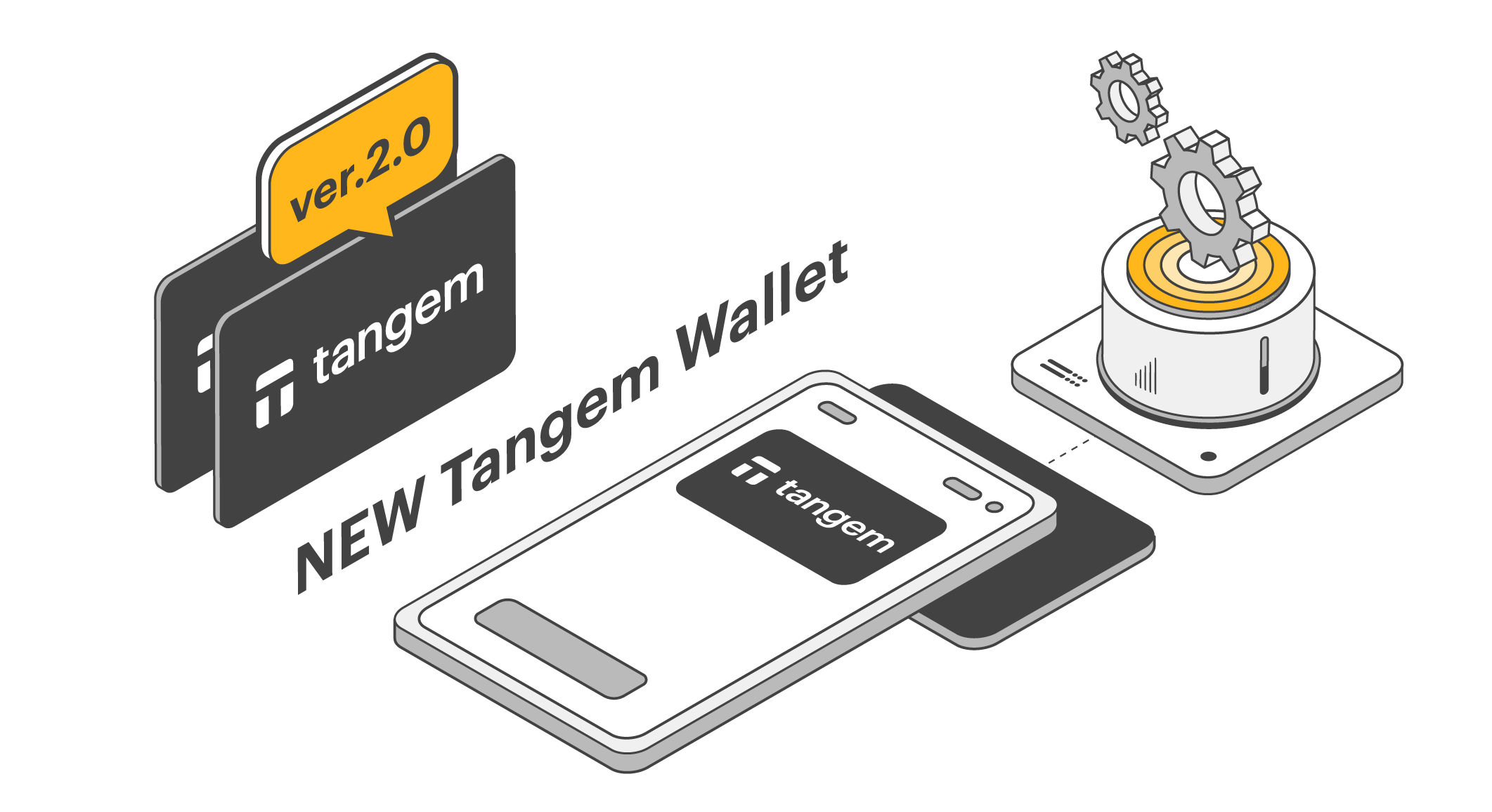
Check this product line as a practical reference—I tend to point people to solutions like tangem when they ask for a straight-up card-first experience. They’re not the only player, though; there are trade-offs in price, ecosystem support, and form factor. But for many users, a tap-to-sign card paired with a companion app reduces complexity without diluting security too much.
On the UX side, NFC cards are delightful. Tap, authorize, done. No cables, no drivers, no fiddling with OTG adapters. Medium sentence here about human behavior: people will actually use security when it’s easy. A longer point about scale and adoption: if the friction is low enough, more users will adopt proper cold storage habits, which improves overall security hygiene across the board.
That said—watch for bad defaults. Some wallets make it trivially simple to export recovery material in less secure ways, or to skip attestation checks. These are the sneaky pitfalls. I’m biased toward workflows that make the secure path the path of least resistance; your wallet should not reward laziness. Also, small nit: documentation that assumes deep technical knowledge is unhelpful—good product docs demystify, not obfuscate.
Threat Models: Who Should Use a Card, and Who Shouldn’t
Whoa! Quick checklist: if you want portability, simplicity, and strong isolation from desktop malware, a card is attractive. If your threat model includes nation-state actors, highly-motivated targeted supply-chain attacks, or the need for multi-party governance, then a card alone may be insufficient. Medium thought: combine approaches—use a card for everyday custody and multisig or air-gapped signing for high-value reserves. Longer thought: risk isn’t binary; it’s layers. Cards are one strong layer, but mixing strategies often gives the best defense-in-depth.
Think about loss scenarios too. Cards can be lost, stolen, or damaged. Use robust seed backup strategies—ideally a well-tested, distributed backup scheme that matches your risk tolerance. Some folks prefer steel backups or multi-location paper backups; others use cryptographic splits and geographical separation. There’s no one-size-fits-all, and frankly that’s fine—prudence beats dogma every time.
Here’s a practical failure mode: someone treats card-based custody as «set it and forget it» without verifying backups. That’s a tacit assumption of durability that can bite you. Verify your recovery process before you need it, not after. Seriously, test restore flows in safe, low-risk environments and write down what worked—you’ll thank yourself later.
Also: don’t ignore usability around transaction metadata. When a signing card pops up a tiny display or limited info prompt, users may consent without reading. That’s a UX + security problem. Ideally, wallets present human-readable summaries and enforce policies for risky operations. It’s easier to fix in companion apps than in immutable chips, so look for vendors committed to improving both firmware and app UX over time.
Realistic Operational Guidance
Whoa! Start small. Buy one card, read the docs, and run a low-value transaction first. Medium tip: keep the card’s packaging and serial number until you’re comfortable, because you might need it for attestation. Medium tip two: prefer vendor images or verified builds for companion apps—third-party wrappers can introduce attack surface. Longer thought: maintain an air-gapped backup process for your seed or use a geographically separated multisig setup for high balances, because a single point of failure is still a point of failure.
Here’s what bugs me about casual cold storage: people sometimes confuse «offline» with «safe.» Offline helps, but it’s neither sufficient nor automatic. You must maintain chain-of-custody for recovery material, and you must test recovery periodically. Oh, and by the way… label things. Physical labels, encrypted notes, whatever helps you reconstruct the story if months pass between uses.
Another practical nugget: think about the device lifecycle. Firmware updates matter. If a vendor stops supporting a card you bought, you need a migration plan. Likewise, consider interoperability—some cards lock you into a particular app ecosystem, which can be fine, but recognize the future cost. I’m not 100% sure every vendor will be around in five years; plan accordingly.
FAQ
Are card-based NFC wallets as secure as Ledger or Trezor?
Short answer: they’re comparably secure in many threat models, but different. Card-based wallets often use secure elements with strong isolation; hardware dongles like Ledger or Trezor expose different attack surfaces (USB stacks, host drivers). Medium answer: choose based on threat model—for protection against everyday malware and phishing, cards are excellent. For institutional multisig or highly targeted attacks, combine approaches or prefer multi-device signing schemes. Longer thought: the specific implementation details—chip vendor, attestation, firmware update policy—matter more than the form factor itself.
To wrap up—well, not wrap up like a slick recap, but to close this thread—I remain cautiously enthusiastic about NFC card cold wallets. They lower friction in important ways, and when paired with thoughtful backup and attestation practices, they become practical tools for many users. I’m biased toward making security usable, and these cards do that job. There’s still risk: supply chain, physical loss, and vendor lock are real. But if you want a simple, pocketable, low-friction way to keep keys offline for day-to-day use, card-based NFC cold wallets deserve a serious look. Somethin’ about tapping a card and feeling in control—it’s weirdly satisfying.